

Why Stress Makes Bladder Urgency Worse
(And What You Can Do About It)

If you have bladder urgency or frequency, you have probably already noticed that stress makes everything worse. A deadline at work. A difficult conversation. Even a busy week with too many obligations and not enough sleep. Suddenly your bladder is running the show, and you are running to the bathroom.
But why? And more importantly, what can you do about it?
The WHY
When you are under stress, your body responds. This is a survival and safety response that gets you ready to react, even when there is nothing physical that you need to react to.
I talked more about the “why” in a recent video. It covers the fight or flight response, muscle tension, pain signaling, and how your nervous system gets pulled into the chaos. If you haven’t watched it yet, it’s worth a few minutes of your time.

Understanding why stress affects your bladder is useful. But knowing what to do about it? That’s where things start to shift.
Your Nervous System Is Doing Its Job. Imperfectly.
When your body perceives a threat (whether that’s an actual emergency or a looming work deadline) your nervous system shifts into sympathetic mode. Fight, flight, freeze, or fawn. Your muscles tighten. Your pain sensitivity increases. And your nervous system starts paying attention to every signal your body sends, more carefully than usual.
We call this hypervigilance. And for people with bladder urgency, it creates a particularly exhausting cycle.
Your bladder sends a signal. Your nervous system, already on high alert, amplifies it. You respond by rushing to the bathroom, bracing for pain, scanning for the nearest exit everywhere you go.

Unfortunately, that response reinforces the cycle. Your nervous system learns that the bladder is something to monitor carefully. So it monitors even more carefully. And the signals get louder.
This is not weakness. This is not anxiety inventing symptoms. These are real, physical responses happening in a real body that is trying to protect you. The problem is that your nervous system cannot tell the difference between a genuine threat and a busy Tuesday.
What Hypervigilance Feels Like
Here is something I tell my patients regularly: “The body believes what we tell it.”
Not in a “think positive and everything will be fine” way. In a very literal, physiological way. The stories we tell ourselves about our symptoms directly influence how our nervous system responds to them.
When my medical student felt urgency building before an exam, her instinct was to panic.
“Something is wrong.”
“I won’t make it.”
“What if I have a UTI?”
“What if it gets worse?”
Each of those thoughts sent another signal to her already-activated nervous system. More threat. More tension. More symptoms.

We worked on interrupting that thought pattern with something more accurate. Not falsely positive. Just true.
“I am not damaged.”
“My body is responding to stress.”
“This is not a UTI.”
“I am not in danger.”
“I have gotten through this before.”
Simple. Specific. Grounded in fact rather than fear.
Over time, and with practice, this kind of deliberate self talk begins to create a different signal for your nervous system. Instead of amplifying the threat response, you are gently (and repeatedly) telling your body that it is safe. And your nervous system, eventually, starts to believe you.
She made it through her exams. Not perfectly, and not without effort. But she had a tool she could use in the moment, and that changed everything.
This Is Not About Eliminating Stress
But Just to be clear. You do not have to eliminate stress from your life to start seeing improvement. That would be impossible. And would cause more stress.
What you can do is start to change your relationship with the signals your body is sending. Recognize hypervigilance when it shows up. Notice the thought patterns that amplify your symptoms. Practice interrupting them with something more accurate. (And a little more gentle)
It takes time. It is not linear. But it is something you can influence. And that matters enormously, because one of the most powerful things for a dysregulated nervous system is the experience of having some control.
If you are dealing with bladder urgency, frequency, or pelvic pain that stress makes worse, pelvic floor physical therapy can help you address both the physical and nervous system components of what you are experiencing. I see patients in my clinic in Winston-Salem, NC, and offer telehealth sessions for those who cannot access specialized care locally.
You can also subscribe to my YouTube channel for more pelvic health education that skips the dismissal and gets straight to the information you need. @ReliefPhysicalTherapy [https://www.youtube.com/@reliefphysicaltherapy]
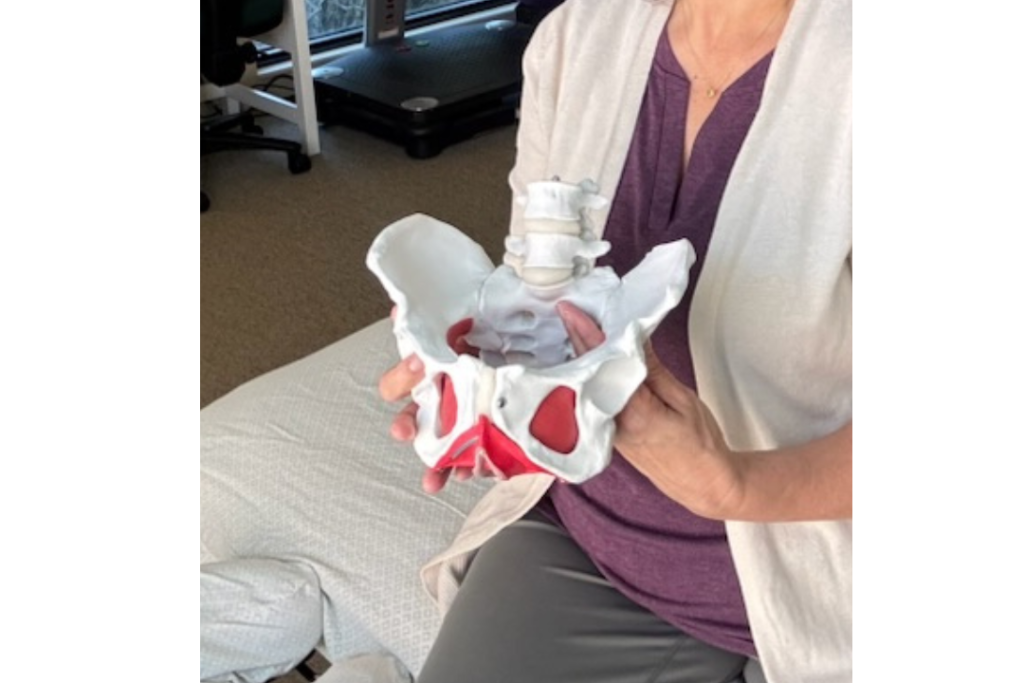

Holly McDonald is a pelvic floor physical therapist specializing in bladder, bowel, and sexual health. She helps people find real solutions after years of being dismissed, misdiagnosed, or told their symptoms are just part of aging.